 en
en
 English
  русский
  Français
  عربى
عربى 

Why Factory Direct Container Houses Are More Cost-Effective for Wholesale Buyers
Content
- What Factory-Direct Container House Pricing Removes
- Volume Orders Turn Direct Sourcing Into Larger Margins
- Landed Cost, Not Quoted Price, Decides Wholesale Profit
- Factory-Direct Quality Control Reaches the Production Line
- When Buying Factory-Direct Is Not the Right Call
- Frequently Asked Questions on Factory-Direct Container House Sourcing
A wholesale buyer quoted for 80 flat-pack container houses received two numbers that told the same story twice: USD 4,280 per unit through a trading company, and USD 3,650 per unit directly from the manufacturing plant. That USD 630 difference per unit, roughly 15 percent, was not material, labor, or shipping. It was the intermediary's margin sitting between the order and the production line.
Wholesale buyers in the international prefabricated housing market face a structural choice: work through an intermediary brand or source directly from a factory. The decision determines not only the unit price, but also how quickly specifications can change, whether customization is practical, and who is accountable when delivered units do not match approved samples. For anyone purchasing container houses in volume, factory-direct sourcing changes all four variables at once.
What Factory-Direct Container House Pricing Removes
Factory-direct pricing is the manufacturer's own export price, with no trading house margin and no regional agent commission added on top. In the container housing supply chain, each intermediary layer typically adds 8 to 15 percent, which is why combined markups of 15 to 30 percent above factory cost are routine in international wholesale deals.
When a wholesale buyer pays an intermediary quote, a measurable part of the budget covers work that adds no value to the building:
- Intermediary margin, usually 10 to 18 percent of the unit price for prefab buildings
- Sales commissions paid to overseas representatives or regional agents
- Re-inspection and repackaging fees when goods pass through third-party warehouses
- Documentation and financing spreads added for export letter-of-credit arrangements
- Risk premiums for warranty claims that never reach the actual manufacturer
Wholesale buyers often assume these costs are small and unavoidable. In practice, the accumulated margin on a 200-unit order of USD 3,500 flat-pack container houses reaches roughly USD 100,000 before freight is even calculated.
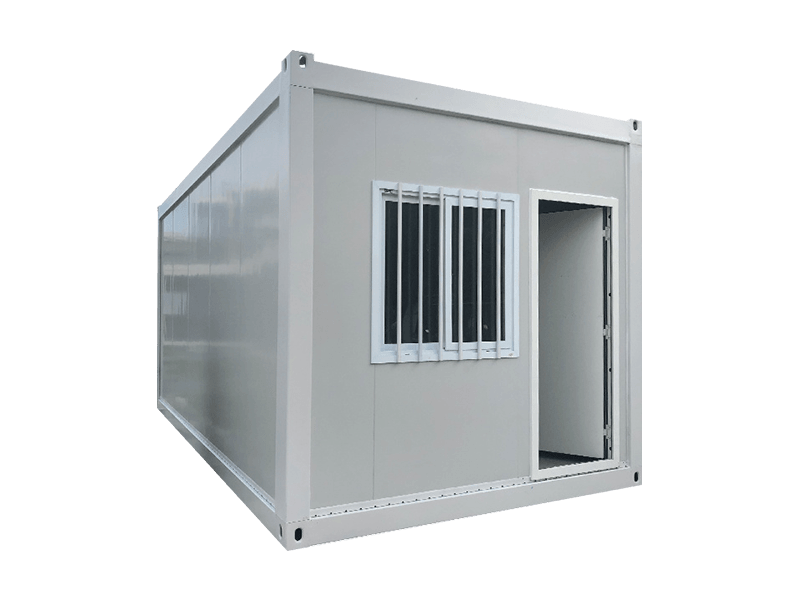
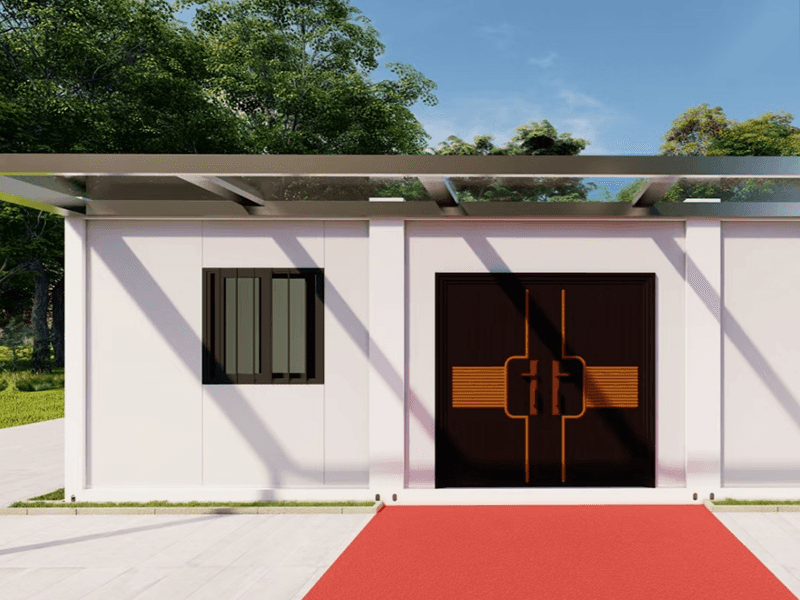 Flat Pack Mobile Container House for Bulk Wholesale OrdersThis modular steel-framed unit ships compactly flat to cut freight costs, making it a practical choice for buyers seeking factory-direct savings on large-volume purchases.View Product →
Volume Orders Turn Direct Sourcing Into Larger Margins
Factory-direct cost-effectiveness scales with order volume because fixed production costs, tooling, and engineering support are amortized across more units, while the buyer gains direct negotiating power over materials and finishing specifications.
Manufacturers price the first quotation on a standard flat-pack container house, then reduce the per-unit price as order volume grows. A 100-unit order spreads fixture and setup costs, allows batch purchasing of steel coils and rock-wool panels, and gives the factory a stable production window. Buyers who commit volume early also avoid the per-order overhead that plants charge on small, irregular purchases.
Illustrative per-unit savings from factory-direct sourcing grow steadily with order size:
Typical per-unit savings for standard flat-pack container houses at factory-direct prices, based on industry order data.
These figures assume standard specifications. Custom insulation, door and window configurations, or interior finishing changes the absolute numbers, but the relationship between committed volume and lower unit price remains consistent across every product line we manufacture.
Landed Cost, Not Quoted Price, Decides Wholesale Profit
The quoted unit price is a starting point, not a final obligation. Landed cost per unit, including freight, customs, inspection, and financing, is the number a wholesale buyer must compare before choosing a supplier.
A factory-direct quotation is structurally cleaner because no intermediary handling fee is added on top of freight, and no warehouse handover cost is hidden in the unit price. The larger landed-cost advantage, however, comes from the building design itself. A flat-packed container house ships as folded panels and frames, which means more units fit in a single forty-foot container. The structural type directly determines shipping volume, so buyers should compare designs rather than price quotations alone.
The impact of the structural choice is substantial enough to justify a side-by-side review of our technical comparison of flat-pack, expandable, and detachable container house designs before you finalize the specification.
| Cost component | Factory-direct | Via intermediary |
| Manufacturing cost at plant | USD 3,000 | USD 3,000 |
| Intermediary markup and commissions | USD 0 | USD 600 |
| Freight and export handling | USD 850 | USD 1,100 |
| Inspection and compliance checks | USD 150 | USD 380 |
| Total landed cost per unit | USD 4,000 | USD 5,080 |
The most commonly overlooked line item is inspection. Intermediaries often charge buyers for third-party inspection, yet do not relay correction requests to the factory floor. Direct buyers can commission the same inspection and forward the report to the production manager at zero additional cost.
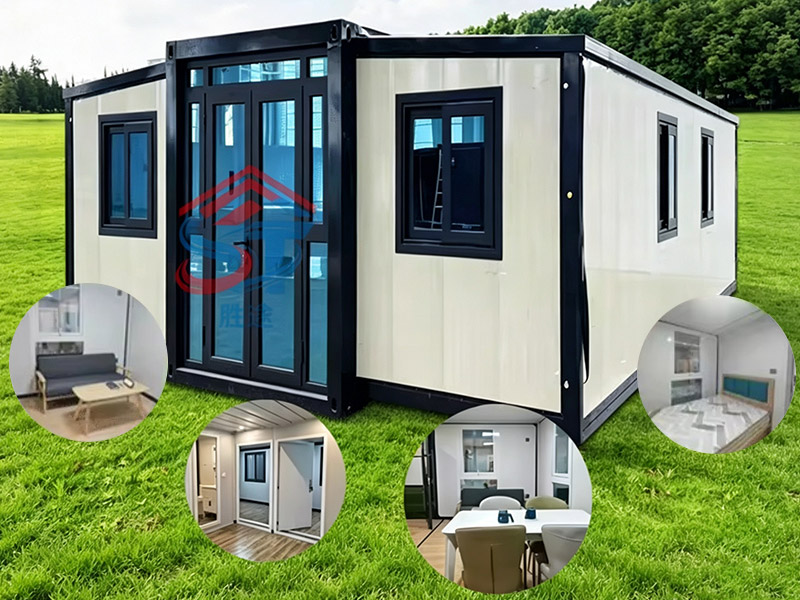
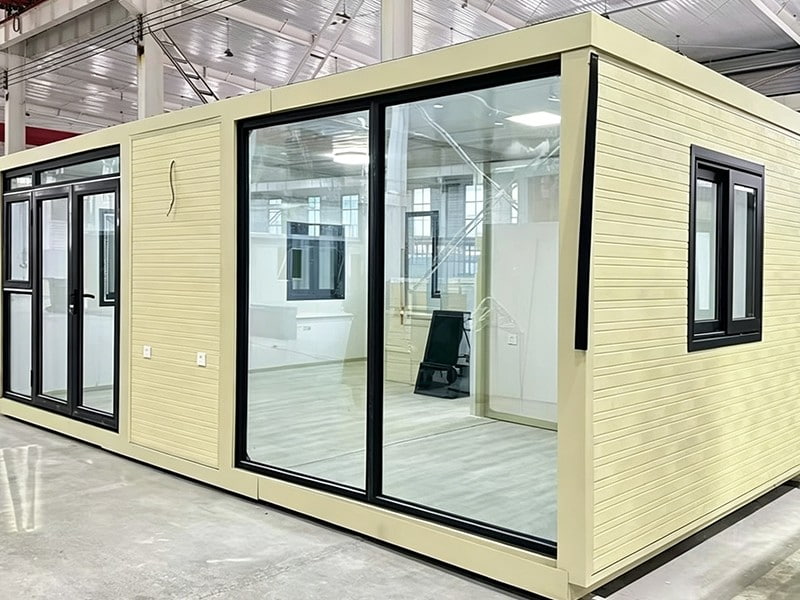 Double Wing Expandable Container House for Direct BuyersIts foldable dual-wing design offers spacious interiors while shipping compactly, and working directly with the plant lets you embed quality requirements into the production order.View Product →
Factory-Direct Quality Control Reaches the Production Line
When a wholesale buyer works directly with the plant, quality requirements are written into the production order itself, not passed through a sales agent whose compensation depends on closing the deal.
Intermediary sourcing creates a communication chain that degrades technical information. The factory hears the buyer's requirement through the trading company, the trading company interprets it, and corrections travel back through the same filter. In factory-direct procurement, engineers, production supervisors, and the buyer's quality team work against a single specification document. At Suzhou Shengtu Integrated Housing Co., Ltd. (Shengtu), every export order begins with the buyer's engineering drawing attached to the production order, not a verbal summary from a sales agent.
Direct sourcing also makes production inspection practical. A wholesale buyer can:
- Schedule a video inspection or on-site visit during the steel-frame assembly phase
- Verify wall panel thickness, insulation density, and welding quality on the production line
- Request photo and dimensional reports before the units are painted and packed
- Resolve non-conformities while the unit is still in production, not after shipment
Direct sourcing means the buyer's engineer and the factory's production manager read the same drawing. That alone eliminates most quality disputes before they start.
For general contractors and project developers, this is the difference between receiving units that match the approved sample and discovering deviations after customs clearance. Every factory-direct buyer should reference our engineering and manufacturing standards for prefab container homes in the purchase contract.
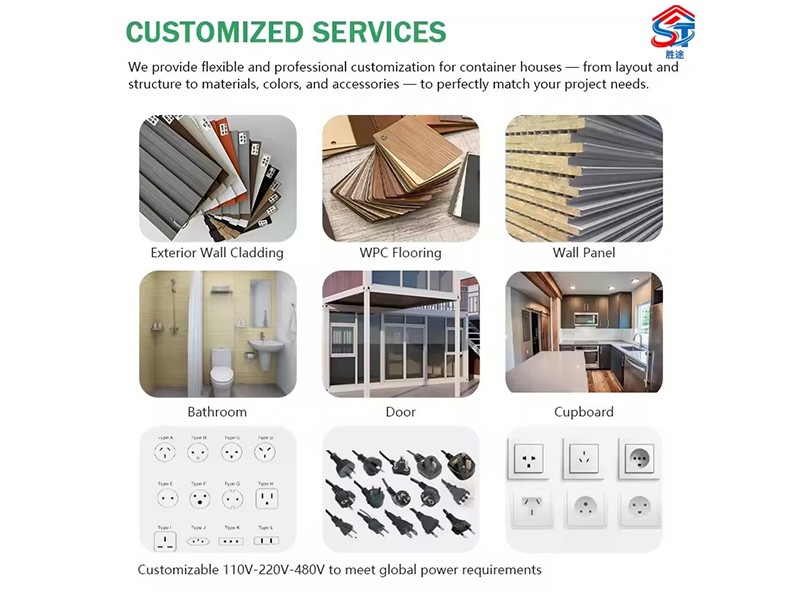 Prefab Container House with Customizable ConfigurationsThis versatile prefab unit suits various projects, but factory-direct sourcing works best for buyers with import experience and volume needs, not one-off local purchases.View Product →
When Buying Factory-Direct Is Not the Right Call
Factory-direct sourcing does not suit every buyer, and an honest manufacturer will say so. Small one-off purchases, projects with strict local warranty requirements, or buyers with no import process may be better served by a regional distributor.
Three situations justify the extra margin that an intermediary charges:
- Orders below five units, where logistics and customs costs per unit outweigh the direct-price saving
- Markets that require an in-country partner for installation, warranty, and after-sales compliance
- Deals that rely on local-currency financing or letter-of-credit structures that banks only accept through a registered trading entity
In every other scenario, the maths is simple: if the order volume covers the buyer's own import coordination cost, factory-direct pricing produces a lower landed cost per unit, a shorter communication loop, and a clearer quality responsibility.
Frequently Asked Questions on Factory-Direct Container House Sourcing
What is the typical price difference between factory-direct and trading company quotes?
For flat-pack container houses, the difference is usually 15 to 30 percent. On a mid-range unit priced at USD 3,000 to 4,000, that equals USD 450 to 1,200 per unit before freight. The gap grows when intermediaries add commissions, re-inspection fees, and documentation charges.
How does flat-pack design reduce shipping costs?
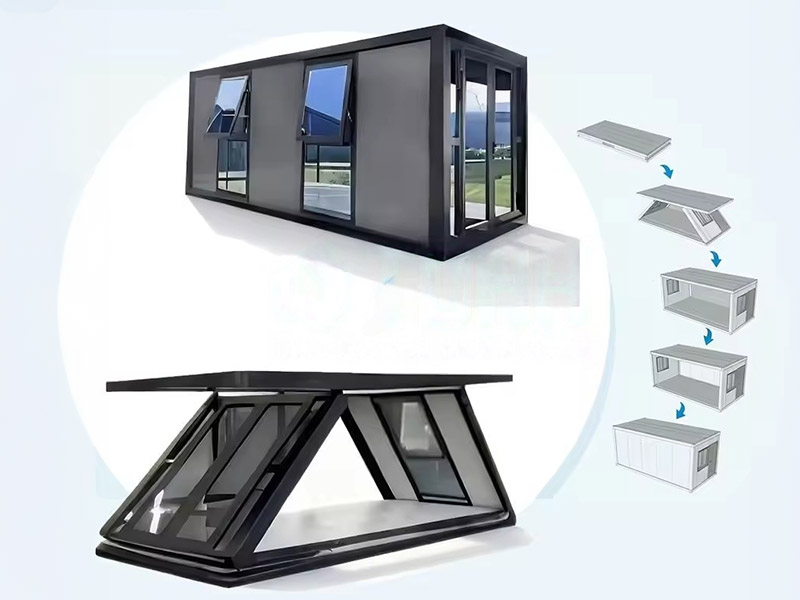
Flat-pack designs disassemble into wall panels, floor frames, and folded roof sections, cutting occupied shipping volume by roughly 60 to 70 percent. A forty-foot container that fits two assembled units can hold eight to twelve flat-packed units, lowering per-unit freight cost significantly.
What is the minimum order quantity for factory-direct container houses?
Minimums vary by product line. Many Chinese factories apply direct pricing from ten to twenty units on standard flat-pack models. Custom expandable designs and luxury micro container houses typically require higher minimums, so it is wise to confirm the MOQ in writing before negotiating price.
How can a wholesale buyer verify that a supplier is a real manufacturer?
Request evidence of production equipment, such as cold-roll forming lines and automated painting systems, review completed container house projects, and schedule a live video inspection during the production cycle. A manufacturer willing to walk you through the line in real time is almost always the real thing.
 View All

Get In Touch
If you have any questions or suggestions, please leave us a message.
Copyright © Suzhou Shengtu Integrated Housing Co., Ltd. All Rights Reserved
PrivacyCustom Modular Container House Manufacturers
